Part 4 · Belief 16 — The Doctrine of the Church
The Lord's Supper
What we believe
The Lord's Supper is a participation in the emblems of the body and blood of Jesus as an expression of faith in Him, our Lord and Saviour. In this experience of communion Christ is present to meet and strengthen His people. As we partake, we joyfully proclaim the Lord's death until He comes again. Preparation for the Supper includes self-examination, repentance, and confession. The Master ordained the service of foot-washing to signify renewed cleansing, to express a willingness to serve one another in Christlike humility, and to unite our hearts in love. The communion service is open to all believing Christians.
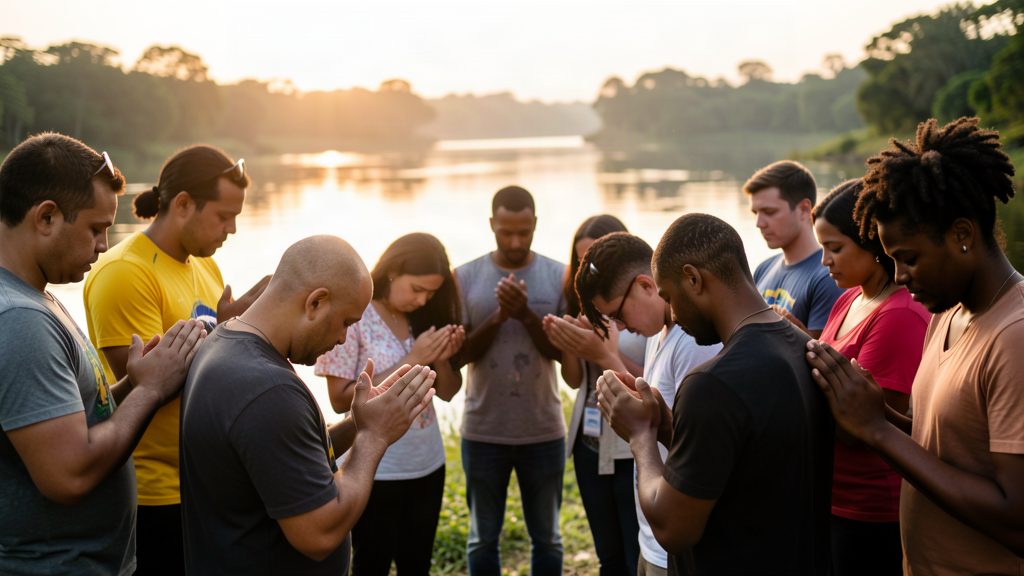
On the night before He died, with the cross only hours away, Jesus did not gather His friends for a lecture — He sat them down at a table. He took bread and a cup, simple things from an ordinary meal, and made them carry the deepest meaning in the world. Then He knelt with a towel and washed their feet. The Lord's Supper is His gift to us across the centuries: a place to remember what His broken body and poured-out blood accomplished, to receive His presence afresh, and to look forward to the day He returns. It is not a ceremony for the perfect; it is bread for the hungry and a welcome for the willing.
Bread and cup that remember
Jesus took the bread, gave thanks, and said, "This is my body, which is given for you. Do this in remembrance of me" (Luke 22:19; see Matthew 26:26-28). The emblems are not the meal itself but a vivid picture: the bread, His body broken; the cup, His blood shed for the forgiveness of sins. Paul explains that "as often as you eat this bread and drink the cup, you proclaim the Lord's death until he comes" (1 Corinthians 11:26). Every Communion looks back to Calvary and forward to His return. We come not to earn anything, but to remember everything He has already done.
The towel before the table
Before the bread was broken, Jesus rose, took a towel, and washed His disciples' feet — the lowliest servant's task (John 13:4, 5). Then He said, "If I then, your Lord and Teacher, have washed your feet, you also ought to wash one another's feet" (John 13:14). This ordinance of humility prepares our hearts: it lets old grudges be laid down, pride be set aside, and forgiveness flow before we approach the table. "If you know these things, blessed are you if you do them" (John 13:17). What the cross looks like in everyday life is a willingness to kneel and serve.
A table for the family
Communion is not a private moment but a family meal. "Because there is one bread, we who are many are one body, for we all partake of the one bread" (1 Corinthians 10:17). The shared cup is "a participation in the blood of Christ" (1 Corinthians 10:16) — we are bound together because we are bound to Him. So we are invited to examine our own hearts honestly first (1 Corinthians 11:28), not to keep anyone out, but to come repentant and reconciled. The table is open to all who love and trust Jesus. And He stands at every heart's door saying, "If anyone hears my voice and opens the door, I will come in to him and eat with him" (Revelation 3:20).
Search the Scriptures
Matt. 26:17-30; John 6:48-63; 13:1-17; 1 Cor. 10:16, 17; 11:23-30; Rev. 3:20.
Reflect
Is there someone you need to forgive, or ask forgiveness from, before you next come to the table? The foot-washing teaches us that Communion is never only between me and God — it draws in my brother and sister too. This week, let Jesus prepare your heart: lay down a grudge, mend a rift, and come to His table free. He is the host, and He is already waiting to meet you there.
Check your understanding
Saved in this browser — no account needed.